
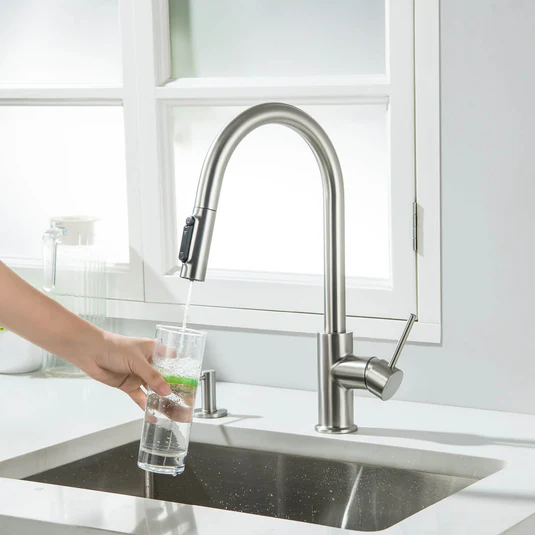
A kitchen faucet is more than just a source of water. It plays a key role in daily tasks such as washing dishes, rinsing vegetables, filling pots and maintaining cleanliness around the sink. With a well chosen faucet, everyday work becomes smoother and more efficient. The range of kitchen faucets available today includes various styles and functions, allowing homeowners and designers to match performance with design preferences.
Common Faucet Styles for Modern Kitchens
There are several styles of kitchen faucets to choose from. Pull‑down faucets feature a spray head that extends down into the sink area. This makes cleaning large cookware and hard‑to‑reach areas easier, as the spray head can be moved freely within the sink space. Pull‑out faucets have a spray head that detaches from the spout and retracts back on a hose, giving flexibility when directing water where it is needed most.
For those who want a classic look or need a higher reach, high‑arc spouts provide extra clearance above the sink. This type of faucet accommodates tall pots and large items without interference, making everyday use more comfortable. On the other hand, pre‑rinse faucets offer a professional‑style spray useful for pre‑cleaning dishes before washing. Many designs also include multiple spray modes to switch between stream and spray functions.
Water Filtration and Specialty Faucet Options
In addition to standard kitchen faucets, there are filtration models that provide filtered water directly from the tap. These faucets integrate water purifying functions into the kitchen workflow, offering convenient access to clean drinking water without extra devices on the countertop. Filtration faucets can come in both pull‑down and pull‑out formats.
Specialty options such as bar faucets and pot fillers also expand kitchen functionality. Bar faucets are ideal for smaller prep sinks or beverage areas, while pot fillers mount near cooking zones to help fill large stock pots without moving them across the kitchen. Matching accessories like soap dispensers and sink drainers further complete the overall kitchen setup.
Materials and Construction for Daily Use
The materials used in a kitchen faucet affect how it stands up to daily use. Many kitchen faucets are manufactured from lead‑free brass or high‑grade stainless steel, supporting both long term use and compliance with potable water standards. These materials resist corrosion and maintain performance in busy kitchen environments, including both residential and commercial settings.
Before faucets reach the market, they undergo rigorous testing such as pressure and material checks to ensure their structural stability and reliability in everyday operation. This testing helps minimize leaks and supports consistent water flow over the lifespan of the faucet.
Design and Function in Harmony
Choosing a kitchen faucet also means thinking about design and how it fits with the overall look of the kitchen. From sleek contemporary finishes to more traditional forms, faucet design influences the aesthetic of the sink area. Finishes such as brushed stainless or classic chrome provide visual appeal while coordinating with sinks, countertops and cabinetry.
A well matched faucet not only performs well but also complements other elements of kitchen décor. A thoughtful combination of function and appearance enhances the cooking space and creates a more pleasant environment for daily use.
Conclusion
Kitchen faucets are key fixtures in modern homes and commercial spaces. With options ranging from standard pull-down and pull-out models to filtration and specialty faucets, there is a style for every kitchen.