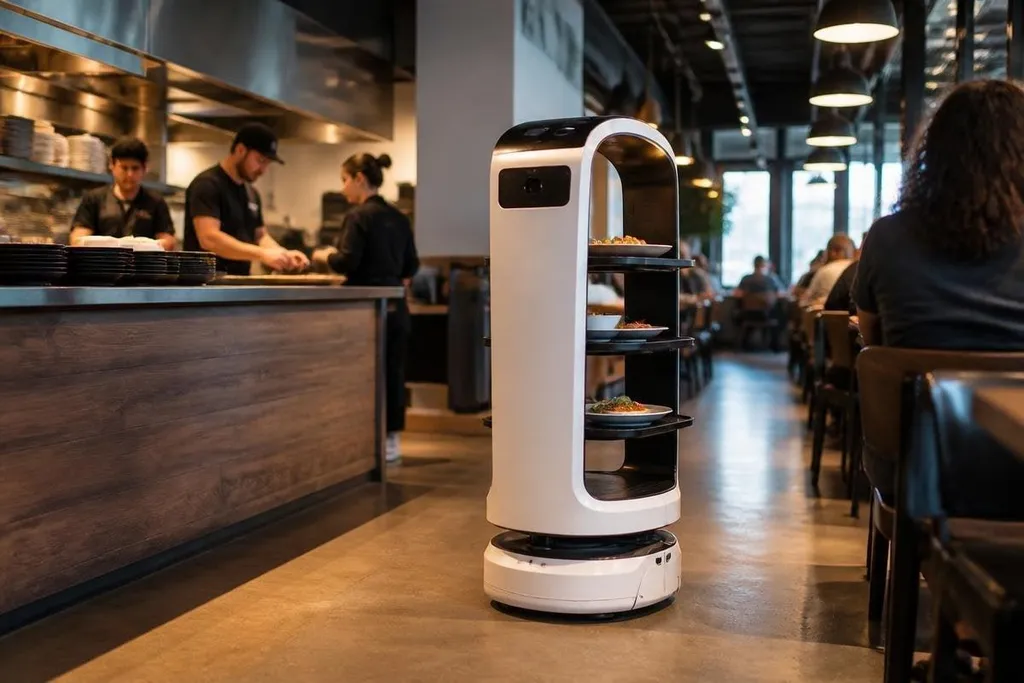
Restaurant robots are moving into kitchens, dining rooms, and delivery work, but the supplied evidence for this article contains no product data, trials, prices, or named sources. That means the useful question is not which robot wins. It’s which claims deserve a closer look.
- A demo must show the full task, not one successful motion.
- A kitchen robot needs cleaning, safety, and repair details beside its speed claim.
- A restaurant should measure labor hours, downtime, and cost per order before buying.
Start with the task, not the robot
A restaurant doesn’t buy a robot because it has an arm, wheels, or a camera. It buys a system to repeat a defined job during a busy service period.
That job might involve carrying dishes, moving ingredients, loading a fryer, or handing food to a customer. Each task brings different demands.
A transport robot needs safe movement around people and enough battery life for its route. A food-handling robot needs a gripper that can manage wet, hot, soft, or uneven items without damaging them.
The useful result, then, is a job done from start to finish. A short clip of a robot placing one item says little about setup time, failed picks, cleaning, or what happens when a person blocks its path.
The proof a restaurant should ask for
A credible trial should show the whole work cycle. That includes loading, movement, handoff, recovery from an error, and shutdown. Missing steps matter because restaurants pay for reliable output, not a polished clip.
Restaurant operators should ask for the same measurements across each system:
- Task rate: orders, trays, or items completed per hour.
- Human help: minutes spent loading, watching, correcting, or cleaning.
- Downtime: stops caused by blocked paths, sensor errors, low battery, or software faults.
- Space needs: floor area, charging points, access routes, and storage for parts.
- Food safety: surfaces, cleaning steps, temperature limits, and inspection records.
- Full cost: purchase or lease price, service fees, power use, training, and repairs.
Those figures turn a demo into a business case. Without them, a restaurant cannot compare a robot with a staff member, a conveyor, or a small change to the kitchen layout.
Restaurant robot claims need the machine, kitchen task, trial date, and result in the same report. Robot24.com can place those facts beside a cooking or delivery claim, so you can judge whether the robot handled a full shift or a short demo. That makes the next test practical: does the job repeat often enough to pay for the machine?
The systems with the clearest case will likely handle work that is repetitive, physically awkward, or spread across a fixed route. That gives their makers a clear place to measure results and limits the number of surprises during a shift.
Open kitchen work is harder. Ingredients vary, surfaces get wet, staff change positions, and orders arrive in uneven bursts. A robot that works beside a single station may need a different design from one that moves through a dining room filled with guests.
Food contact adds another layer. Any machine near ingredients needs clear rules for cleaning and inspection. A faster cycle does not help if staff must stop service to wash parts by hand after every small task.
The missing evidence matters most here. No source pack was supplied for this article, so there is no basis for naming a company, quoting a deployment, or claiming that one restaurant robot leads the field.
A buying check for restaurant operators
Use this list before a pilot or purchase:
- Ask for an uncut video of the complete task.
- Record output during a full service period, not a short test.
- Count human minutes spent preparing and correcting each run.
- Check cleaning, food-contact, and emergency-stop procedures.
- Price the robot beside the changes needed in the kitchen.
- Set a stop rule for downtime, safety faults, or missed orders.
I’d wait for those numbers before calling any restaurant robot ready to buy.
The next useful report should name the machine, the restaurant, the task, the trial length, and the measured result. Until then, the best signal is not a dramatic demo. It’s a repeatable job with a cost that holds during service.